Supporting Sustainable Seafood: A Conversation with Barton Seaver
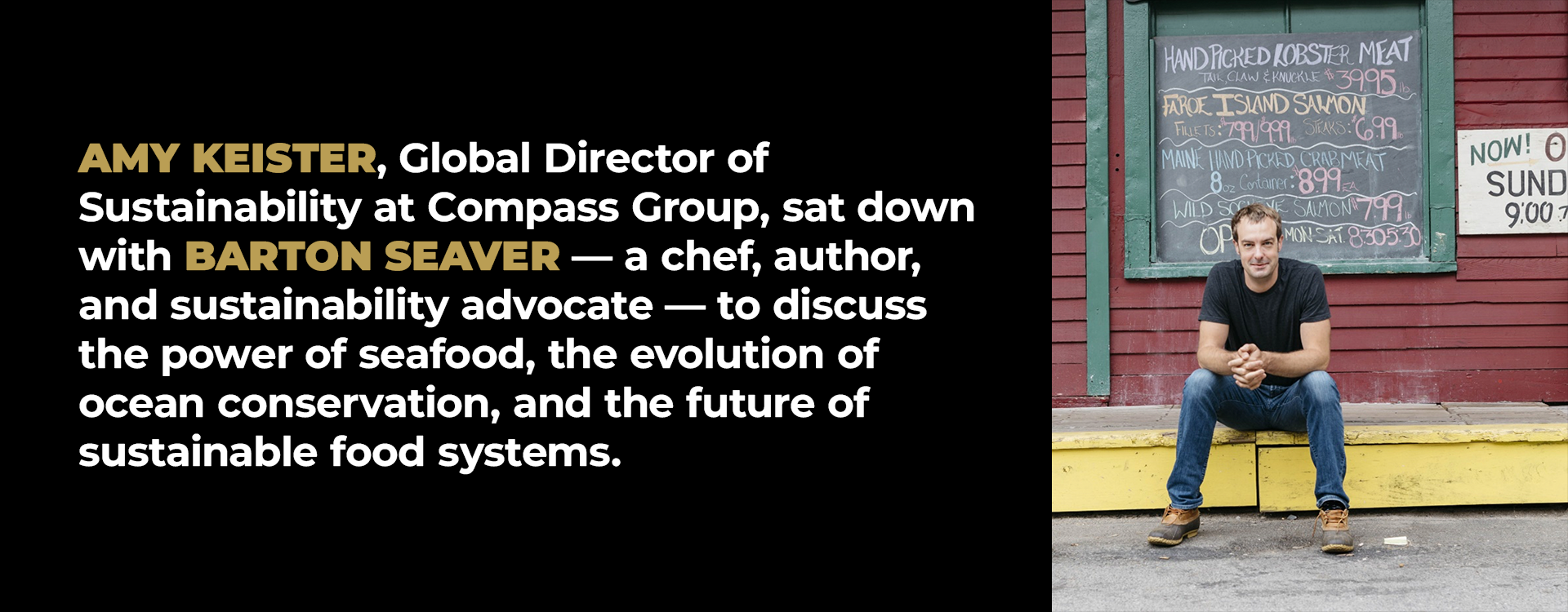
Amy:
What first sparked your passion for seafood and the ocean?
Barton:
I was raised in a multi-ethnic neighborhood in Washington DC among families who celebrated food as a way of connecting with one another and with the world around us. This idea of connection drove me into my career as a chef. And I became enamored with seafood in particular because of the romance and appeal I’ve always felt towards coastal communities and ecosystems. But also, just as a cook, seafood is by far the most interesting ingredient category. There are so many tastes, colors, textures, narratives, seasons, and origins that we can use seafood to explore. Cooking seafood has never just been about the flavor, it’s about exploring our relationship with the oceans, lakes, and rivers, and discovering deliciousness.
Amy:
Over the past decade, how have you seen the conversation around ocean conservation evolve, and where do you think it’s headed in the future?
Barton:
The conversation about sustainable seafood has for a long time been about managing scarcity. The conversation started with a bit of finger wagging, “Bad human, bad. We’ve messed things up and we’ve got to fix them.” And while there is yet much to fix about fisheries and fish farming, from forced labor to environmental abuses, climate impacts, and more, so much is going right in the seafood industry that I think it’s time we start celebrating that. It’s time to shift the conversation to include a robust dialogue about how we use seafood to fix some of the larger problems in this world, from public health, to food security, to supporting resilient ecosystems and more. When we talk about sustainable seafood within the parameters of managing abundance, we begin to see seafood and our oceans, lakes, and rivers, as partners to and drivers of the world we want to live in.
Amy:
As you look to the future, what excites you most about partnering with Compass Group to continue advancing a sustainable seafood system?
Barton:
I’ve been so impressed by the sincerity of Compass’ commitment of pursuing better outcomes. And I think what’s really visionary about your work is that you have identified and understand how powerful a force your site operators can be in this process. This is not just top-down, but rather about creating intrinsic motivation: getting your people on the ground to understand, and to take credit for, the success.
Amy:
How can everyday diners — whether in cafés, schools, hospitals, or restaurants — make seafood choices that actively support the health of our oceans?
Barton:
First thing we need to do is simply to decide to eat seafood more often. Every time we replace red meat with a seafood item, it’s a win. Our health will improve, our environment will be more resilient, and seafood economies will offer more opportunities. The great advantage the Compass has here, is as much as you are serving forth intention, you serve forth delicious. And that’s a language that everyone speaks. With every plate of seafood served, you are making the case to that diner that they should return with the expectation that within the Compass ecosystem, something delicious this way swims.
About Barton Seaver
Barton Seaver is a Maine-based chef, author, and sustainability advocate whose work bridges culinary innovation, ocean conservation, and public health. A National Geographic Explorer and U.S. Culinary Ambassador, he earned acclaim for his eco-conscious restaurant Hook in Washington, D.C. Seaver leads the “Seafood That Matters” movement, promoting seafood as a solution for climate resilience, nutrition, and economic equity. As a strategic advisor to the Brain Health Initiative and co-instructor of a Harvard course on neuro-nutrition, he explores the link between diet and cognitive health. Seaver continues to inspire change through education, advocacy, and deep engagement with coastal communities.