From Kitchen to Community: The Partnerships Reducing Food Waste
This year for #StopFoodWasteDay, we are proud to spotlight how strong partnerships across the supply chain are turning surplus food into meaningful community impact.
Founded in 2012 by Vesta Foodservice, Chefs to End Hunger is a nonprofit organization dedicated to reducing food waste and fighting hunger by redistributing excess prepared food from restaurants, hotels, and foodservice operators to nonprofit organizations serving communities in need.
What makes the program unique is its built-in distribution model. By leveraging Vesta’s existing delivery network, Chefs to End Hunger provides donation kits that include boxes, pans, and labels and coordinates the pickup and delivery of donated food through established routes. This approach makes food recovery simple for culinary teams while ensuring safe, wholesome food reaches people instead of landfills.
Programs like Chefs to End Hunger work best when the entire supply chain participates. Through partnerships across Compass sectors—including Bon Appétit Management Company (BAMCO) and Morrison Healthcare—food recovery is integrated directly into daily operations.
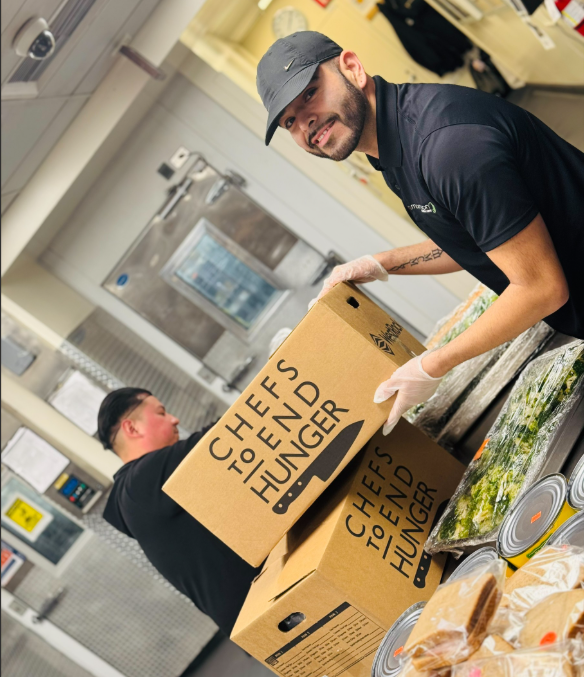
At Bon Appétit Management Company, Chefs to End Hunger has been a cornerstone of the company’s food recovery strategy since 2014. By embedding donations directly into the distribution system, recovery becomes part of everyday workflows. Culinary teams can quickly redirect surplus prepared meals, short-dated beverages, and post-event food to nonprofit partners while also supporting compliance with food waste regulations such as California SB 1383.
At Morrison Healthcare, the impact is especially visible in healthcare environments. At UCI Health, Chefs to End Hunger has become an important part of the hospital’s broader waste reduction strategy. By pairing the program with the Waste Not™ 2.0 tracking system, culinary teams can clearly identify where surplus food is directed—whether to landfill, compost, or donation—strengthening waste stream management and enabling more intentional operational decisions.
As Chef Joseph Hirsch, Regional Executive Chef at UCI Health — Orange, explains:
“Sustainability is accountability—and it starts with us. Every day we unleash talent through the power of food by giving back to our communities. Donating food matters because good food should feed people, not landfills. Through Stop Food Waste programs like Chefs to End Hunger and Waste Not 2.0, we’re making a real impact.”
At UCI Health — Orange, the culinary team stages clearly labeled red and green waste containers in production areas to support accurate tracking. Data is recorded in real time using the Waste Not™ 2.0 tablet, ensuring that unusable items are composted while safe surplus food is recovered and donated through Chefs to End Hunger.
Chef Hirsch has seen firsthand how the program strengthens both operational efficiency and community impact:
“While reducing food waste and diverting material from landfills remains a priority, the most rewarding part is knowing that safe, surplus food is nourishing people in our community. The program is remarkably easy to execute and maintain, and it allows our teams to create meaningful impact with minimal operational burden.”
Across the Morrison Healthcare system, the program is expanding. At Los Angeles General Medical Center, Morrison Healthcare has partnered with Chefs to End Hunger for several years, with the collaboration becoming more formalized following the launch of the hospital’s organic waste program.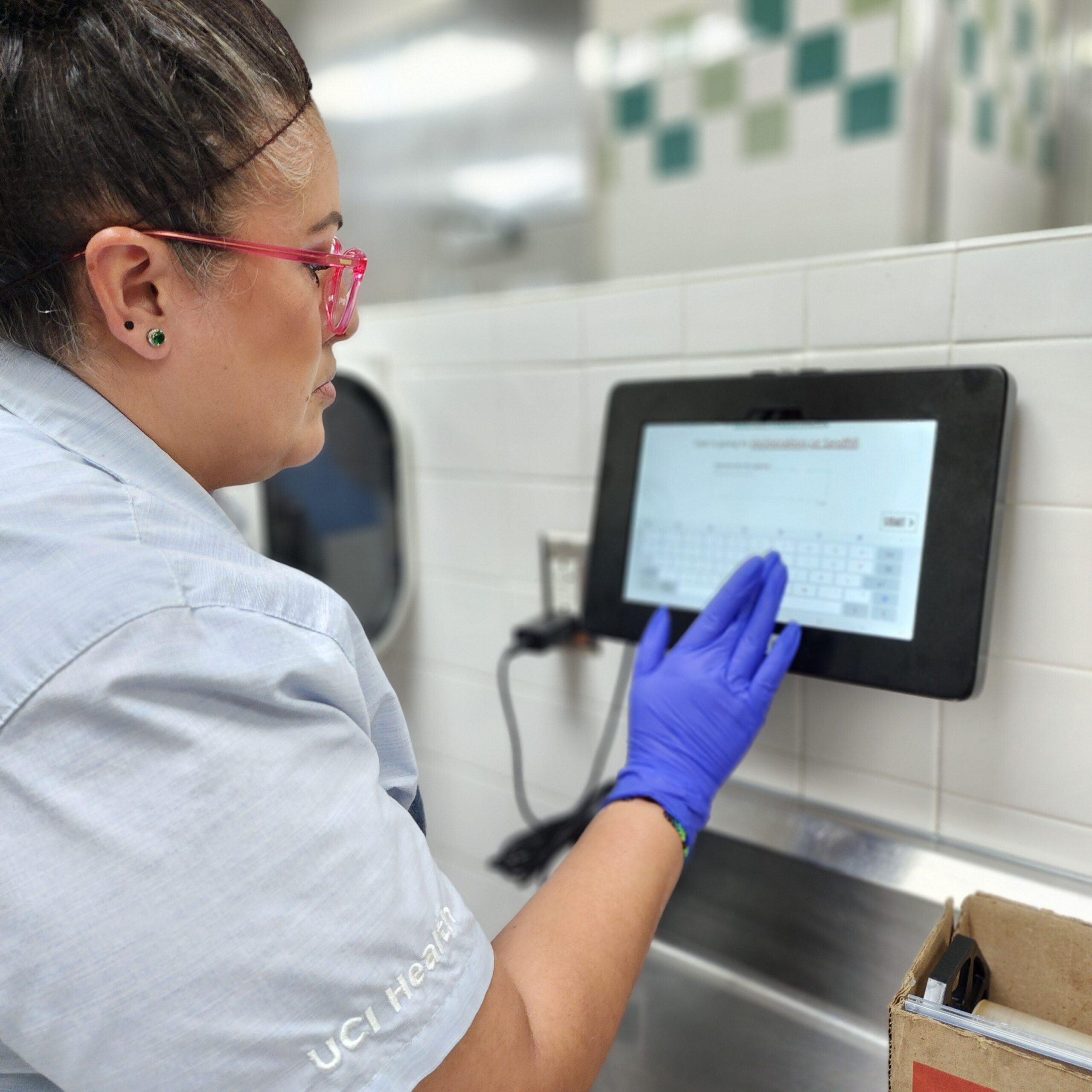
Using Waste Not tracking, the team can clearly identify where surplus food is directed—whether to landfill, composting, or donation through Chefs to End Hunger—improving visibility and strengthening waste stream management. The program has been well received by hospital leadership and has even been featured during LA General’s televised town halls as part of the hospital’s broader sustainability initiatives.
The partnership has also created an effective solution for rotating disaster preparedness supplies, such as MRE bars approaching expiration. Prior to partnering with Chefs to End Hunger, donation coordination required significant staff time to arrange pickups with local food banks. Today, Vesta manages donation logistics, greatly streamlining the process and making food recovery more efficient and reliable.
The results speak for themselves. In FY25, the culinary team at UCI Health — Orange donated 223 Chefs to End Hunger kits, totaling 6,647 pounds of food. This achievement reflects the team’s strong commitment to sustainability and community support.
Across both Bon Appétit Management Company and Morrison Healthcare, culinary teams are capturing waste data, composting what cannot be used, and donating safe surplus food—ensuring that more good food feeds people, not landfills.